When the sun sets over the Bosphorus, Istanbul doesn’t sleep-it wakes up. The city’s nightlife isn’t just a list of clubs and bars; it’s a living rhythm that pulses through alleyways, rooftop terraces, and historic waterfront districts. You can sip raki beside 1,000-year-old walls in Karaköy, dance to live saz music in a hidden basement in Beyoğlu, or watch the city lights shimmer from a boat drifting past the minarets. This isn’t tourism. This is Istanbul breathing.
Where the Night Begins: Beyoğlu and İstiklal Avenue
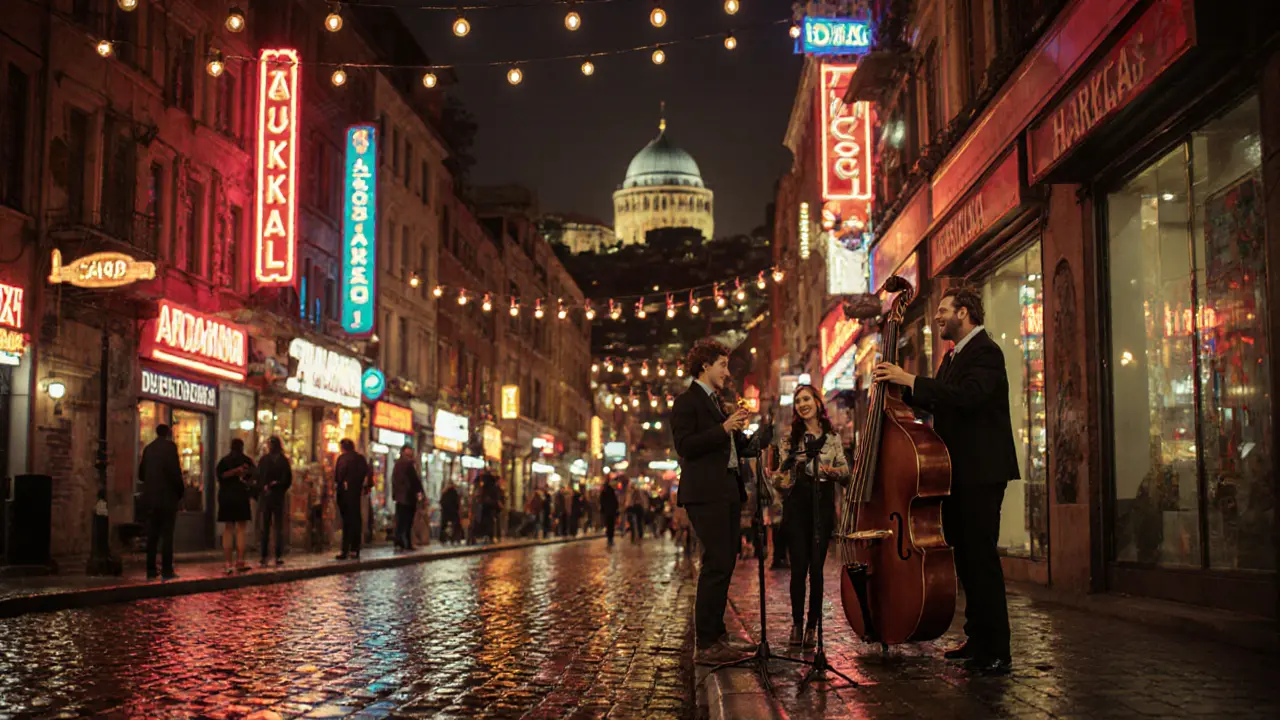
İstiklal Avenue is the spine of Istanbul’s nightlife. By day, it’s a crowded pedestrian street with bookshops and bakeries. By night, it transforms. Neon signs blink in Turkish, English, and Russian. Jazz clubs spill sound onto the sidewalk. Young locals queue outside Karaköy Güverte, a rooftop bar with panoramic views of the Golden Horn. You don’t go here to be seen-you go because the energy is real.
Walk just a few blocks off İstiklal, and you’ll find Asitane, a 150-year-old Ottoman tavern turned live music venue. The walls are stained with decades of smoke and laughter. The owner plays the ney flute between sets. No tourist brochures mention it. Locals know. You’ll hear traditional Turkish folk songs mixed with modern beats. The crowd? Students, artists, retired musicians, and travelers who stumbled in by accident.
The Bosphorus After Midnight
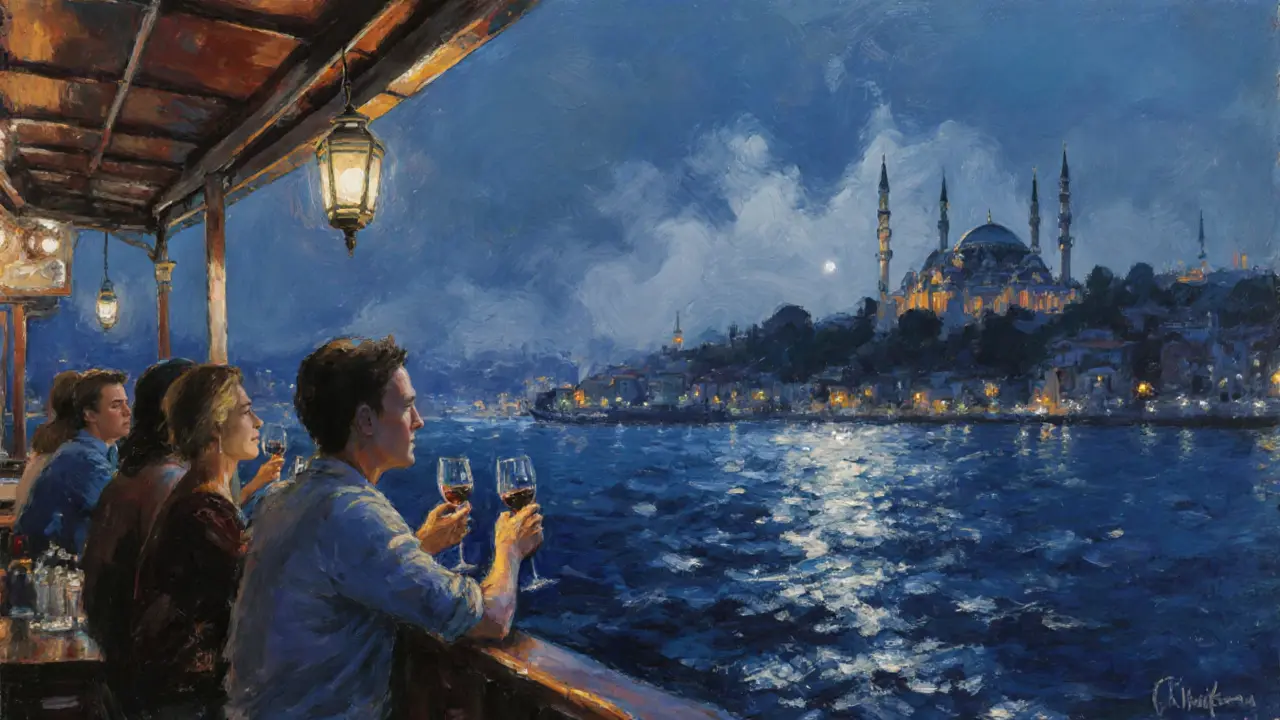
Forget the daytime cruise. The real magic happens after 11 p.m. on the water. Boat bars like Yasemin and Blue Bosphorus anchor near the Rumeli Fortress, playing chill house and deep techno. You order a glass of local white wine, lean against the railing, and watch the lights of Üsküdar flicker across the strait. No loud bass. No bouncers. Just the lapping water and the distant call to prayer from a mosque on the Asian side.
These aren’t party boats. They’re floating lounges. Locals bring blankets and snacks. Tourists sit quietly, cameras down. It’s the only place in Istanbul where you can feel both the weight of history and the freedom of the present at the same time.
Karaköy: The Hipster Heartbeat
Once a forgotten dockside district, Karaköy is now the epicenter of Istanbul’s creative night scene. Here, converted warehouses house cocktail bars with hand-cut ice and smoky mezcal drinks. Bar 1914 serves cocktails named after Ottoman sultans. The bartender knows your name by the third visit. The walls are lined with vintage Turkish film posters and black-and-white photos of 1970s Istanbul rockers.
Down the street, Wine House has over 200 Turkish wines on offer-many from small vineyards in Cappadocia and the Aegean. The staff will pour you a taste of a 2022 Öküzgözü red from a family-run winery in Malatya. No tasting menu. Just curiosity and conversation. This isn’t about drinking. It’s about discovering a side of Turkey most guidebooks ignore.
Neighborhoods You Won’t Find on Google Maps
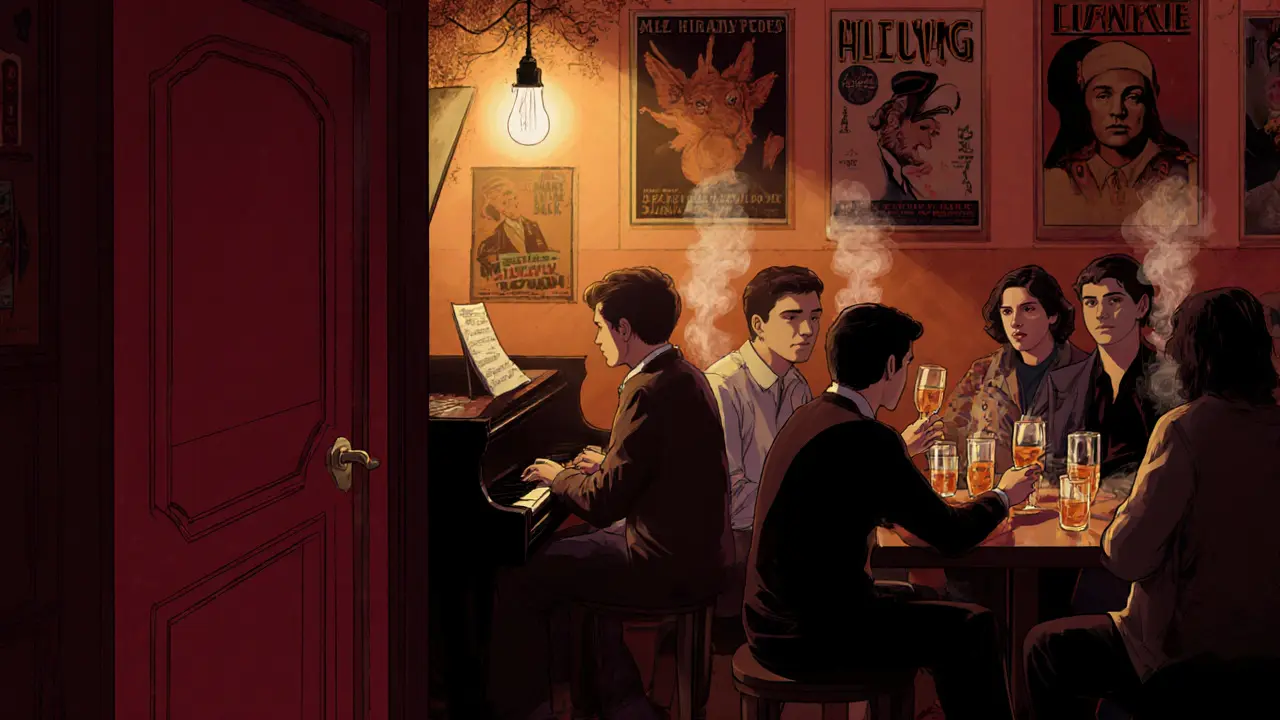
Most visitors stick to Beyoğlu. But the real soul of Istanbul’s night lives in quieter corners. In Çukurcuma, antique shops close at 8 p.m., and jazz bars open at 10. Bar 120 has no sign. Just a red door. Inside, a piano player covers Leonard Cohen while the owner serves homemade rakı infused with rose petals.
In Balat, the Jewish quarter, small taverns serve grilled sardines and local wine under string lights. The owner, a 72-year-old woman named Ayşe, remembers when this neighborhood was full of synagogues and Yiddish songs. Now, she plays Turkish pop records and tells stories of the old days. You won’t find this on Instagram. You have to be there.
What Makes Istanbul’s Nightlife Different
It’s not the drinks. It’s not the music. It’s the mix. Istanbul is the only city where a 20-year-old student can dance to electronic beats next to a 65-year-old imam’s son who still sings classical Ottoman music. Where a Russian expat and a Syrian refugee share a table at a kebab spot at 3 a.m. and end up talking about their hometowns.
There’s no dress code. No cover charge at most places before midnight. No bouncers turning people away because they’re wearing jeans. The only rule? Be respectful. Don’t shout. Don’t push. Don’t treat it like a theme park.
The city doesn’t cater to tourists. It welcomes them. And if you listen, you’ll hear the layers-Byzantine echoes, Ottoman grandeur, Soviet jazz influences, and the raw pulse of modern Turkish youth.
When to Go and What to Avoid
Weekends are packed. If you want space, go on a Tuesday or Wednesday. Bars stay open until 5 a.m., but the real party ends around 2 a.m. after the last song. Don’t expect 24-hour clubs like Berlin or Ibiza. Istanbul’s nightlife is intimate, not endless.
Avoid the tourist traps in Taksim Square after 1 a.m. The clubs there charge 200 Turkish lira just to walk in and play the same three EDM tracks on loop. You’ll pay more for a watered-down cocktail than you would in London. Skip them. Walk 10 minutes to a side street. You’ll find better music, better people, and better stories.
Also, don’t drink tap water. Stick to bottled. And never accept a free drink from a stranger. It’s not a trick-it’s just not how things work here. Locals buy their own rounds.
How to Experience It Like a Local
- Start at a lokanta (local eatery) at 9 p.m. Eat grilled eggplant, lentil soup, and fresh bread. Then walk.
- Carry small bills. Many places don’t take cards after midnight.
- Learn to say “Şerefe!” (To your health!) before you raise your glass.
- Don’t rush. The night lasts. Let it unfold.
- Ask for recommendations from shopkeepers, not hotel staff. They know the real spots.
The best night in Istanbul doesn’t start at a club. It starts with a walk. You turn a corner. You hear music. You smell grilled meat and incense. You see people laughing under a single string of lights. You don’t know why you’re there. But you know you belong.
Is Istanbul’s nightlife safe for solo travelers?
Yes, especially in areas like Beyoğlu, Karaköy, and the Bosphorus waterfront. Istanbul has low violent crime, and nightlife districts are well-lit and patrolled. But always trust your instincts. Avoid isolated alleys after 2 a.m., don’t display expensive items, and never follow strangers into unknown buildings. Locals are generally helpful-if you look lost, someone will ask if you need help.
What’s the best time of year for Istanbul nightlife?
Late spring (May-June) and early autumn (September-October) are ideal. The weather is mild, outdoor terraces are open, and the crowds aren’t overwhelming. Summer (July-August) is hot and packed with tourists, while winter nights are quieter but still lively indoors. If you want authentic local energy, avoid July and August.
Do I need to speak Turkish to enjoy Istanbul’s nightlife?
No, but learning a few phrases helps. Most bartenders and bar staff in popular areas speak basic English. But in smaller venues, especially in Balat or Çukurcuma, Turkish is the norm. A simple “Teşekkür ederim” (Thank you) or “Lütfen” (Please) goes a long way. Locals appreciate the effort-even if you mess up the pronunciation.
Are there any quiet places to relax at night in Istanbul?
Absolutely. Try the gardens of Yıldız Park near Beşiktaş, where locals sit under trees with tea and music. Or head to the Galata Tower rooftop after 10 p.m.-it’s less crowded than during the day. For something truly peaceful, take a 10-minute ferry to Adalar (Princes’ Islands). No cars. Just bicycles, quiet cafes, and the sound of waves.
What’s the average cost for a night out in Istanbul?
You can have a full night for under 500 Turkish lira ($15 USD). A meal at a local eatery: 120-180 TL. A cocktail: 80-150 TL. A bottle of local wine: 200-300 TL. Entry fees are rare before midnight. Many places don’t charge at all. Skip the tourist bars-they charge 2-3x more for the same drink. Stick to local spots, and you’ll get more flavor, more culture, and more value.