Forget what you’ve seen in movies or heard from friends. In Dubai, there’s no such thing as a "romantic" or "sensual" massage that crosses the line into sexual activity-and if you think there is, you’re risking serious consequences. The city doesn’t just discourage sex massage; it criminalizes it. Every massage parlor you walk into must follow strict rules, and any hint of sexual service turns it from a business into a crime scene.
Dubai’s Laws Are Clear: No Sexual Services Allowed
Dubai operates under federal UAE laws, and Article 358 of the UAE Penal Code makes it illegal to engage in or offer any sexual service for payment. That includes massage parlors offering "special treatments" that sound innocent but are clearly coded for sex. The law doesn’t care if you’re a tourist, a resident, or a local. If you pay for a massage and the provider suggests or performs anything sexual, both you and the provider can be arrested.
Police in Dubai actively monitor massage centers, especially in tourist-heavy areas like Deira, Bur Dubai, and Jumeirah. In 2023, authorities shut down 17 massage businesses after undercover operations found staff offering sexual services. Those operators faced fines up to AED 100,000 and mandatory deportation. Customers? They were fined AED 5,000 to AED 20,000 and sometimes detained for questioning.
What Counts as a Legal Massage?
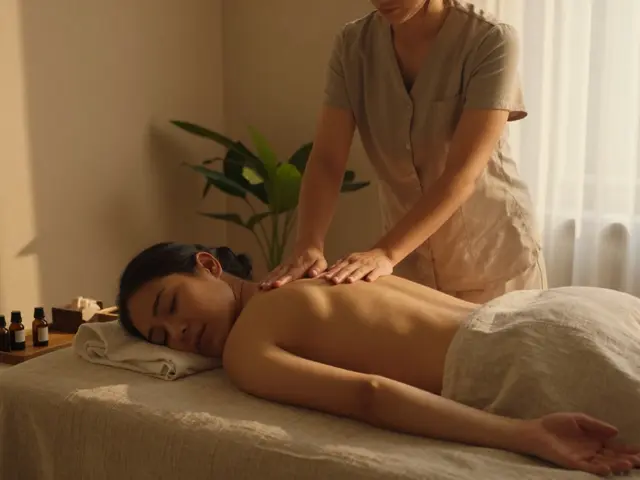
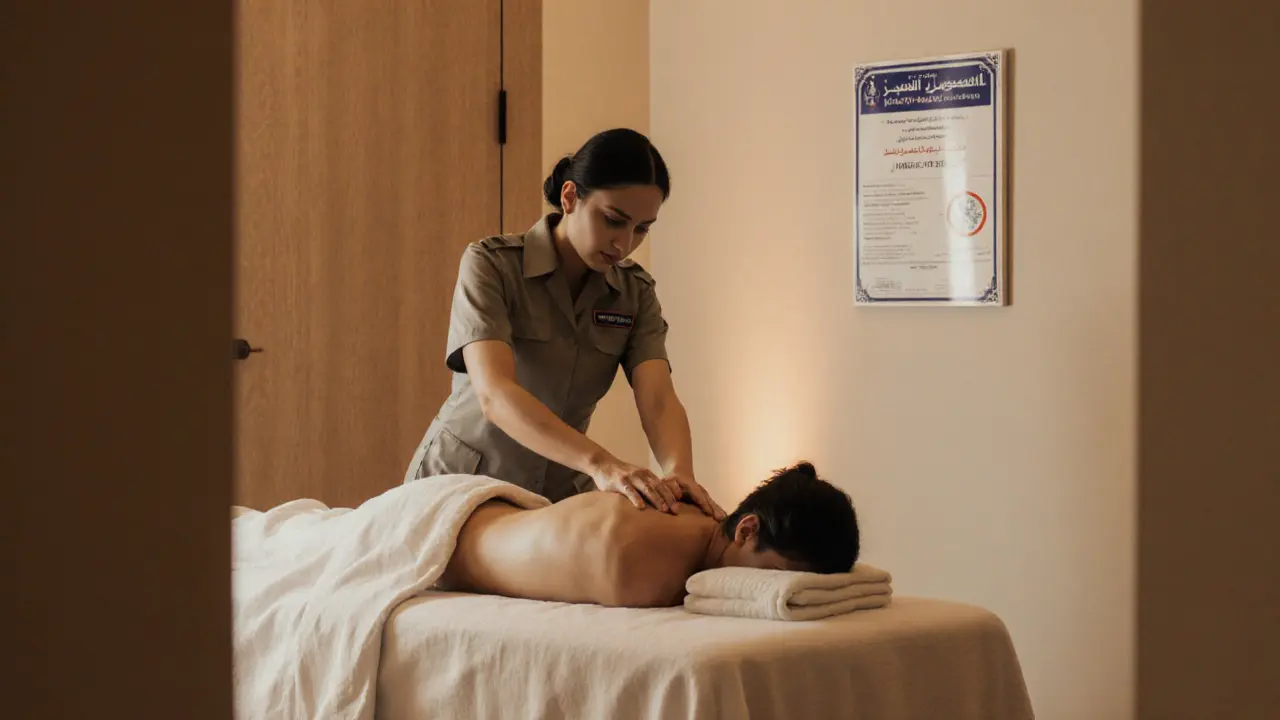
Not all massages are illegal. In fact, Dubai has hundreds of licensed spas and wellness centers that offer professional therapeutic massage. These places are registered with the Dubai Health Authority (DHA) and display their licenses visibly. A legal massage focuses on muscle relief, stress reduction, or physical therapy. Therapists are trained in anatomy and use oils or techniques approved by health standards.
Here’s what a legal massage looks like:
- Therapist wears professional attire (no revealing clothing)
- Room is clean, well-lit, and has no private locking doors
- Services are clearly listed on a menu with prices (no hidden "extras")
- Staff do not suggest or imply sexual services
- Payment is made at the front desk, not in cash to the therapist
Many high-end hotels like the Burj Al Arab, Atlantis, and Ritz-Carlton have certified spas that follow these rules. You can book online, read reviews, and know exactly what you’re paying for.
Red Flags: How to Spot an Illegal Massage Parlor
If you’re looking for a massage and something feels off, it probably is. Illegal operators rely on secrecy and vague language. Watch out for these signs:
- The place has no visible license or health certification
- Signs say "Thai massage," "relaxation," or "special treatment" without explaining what it is
- Staff ask you to pay extra for "private time" or "upgrades"
- There are no windows, or the door locks from the inside
- The business is in a residential building or back alley, not a commercial zone
- Online reviews mention "hidden services," "discreet," or "no questions asked"
Google Maps and TripAdvisor are useful, but don’t trust vague language. If a review says, "Best massage in Dubai-worth every dirham," but doesn’t describe the technique or therapist’s qualifications, be suspicious.
Tourists Are Not Exempt
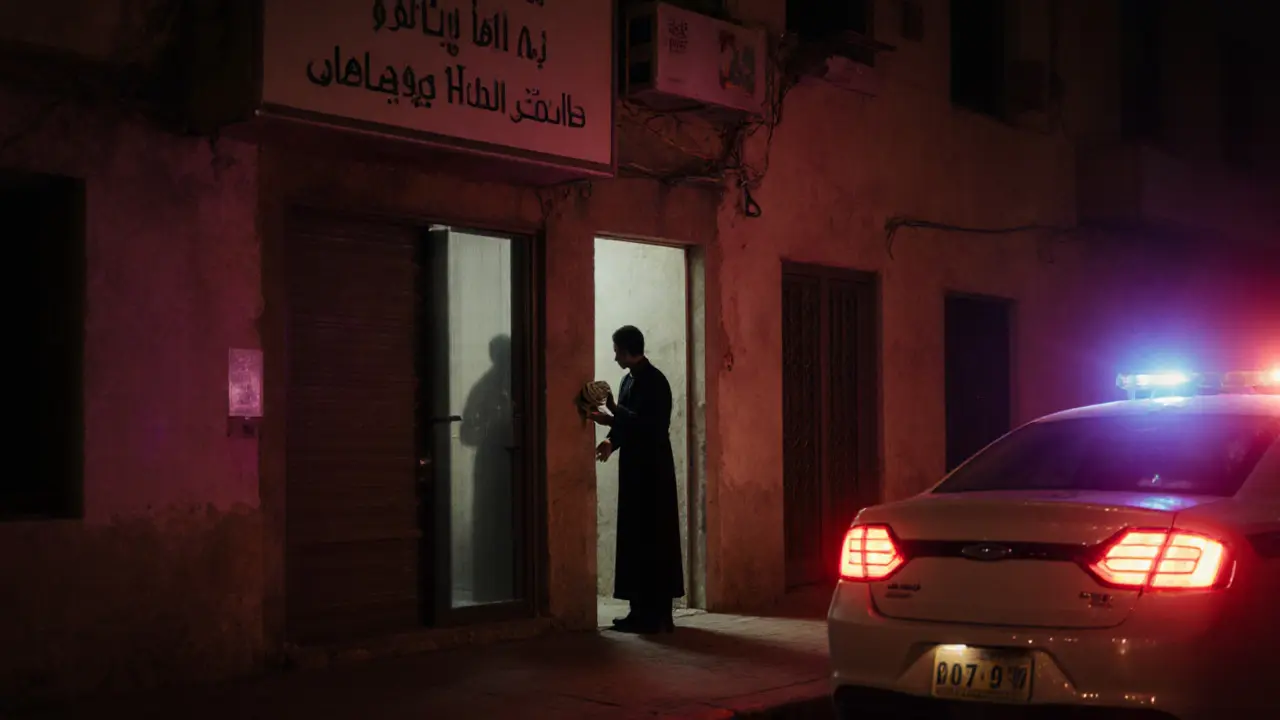
Some visitors think, "I’m just here for a week, they won’t care." That’s a dangerous myth. Dubai’s police don’t care where you’re from. In 2024, a British tourist was arrested after a massage therapist reported him for attempting to touch her inappropriately. He spent three days in jail before being deported. His passport was flagged-meaning he can’t re-enter the UAE for five years.
Even if you don’t pay for sex, just asking for it can get you in trouble. In one case, a Canadian man asked a therapist if she could "do more" during a back massage. She reported him. He was fined AED 15,000 and banned from entering Dubai for three years. The law doesn’t require proof of physical contact-intent is enough.
What Happens If You Get Caught?
If you’re caught engaging in or soliciting sexual services during a massage, here’s what you can expect:
- Immediate detention by police or security
- Interrogation at a local police station
- Legal notice issued under Article 358
- Fine between AED 5,000 and AED 20,000
- Deportation (for foreigners)
- Entry ban (usually 3-5 years, sometimes permanent)
There’s no "get out of jail free" card. No embassy can get you out of a criminal charge. No lawyer can erase the record. Your name will be in a national database. If you ever try to apply for a visa to any Gulf country-Saudi Arabia, Qatar, Kuwait-you’ll be flagged.
What About Couples’ Massages?
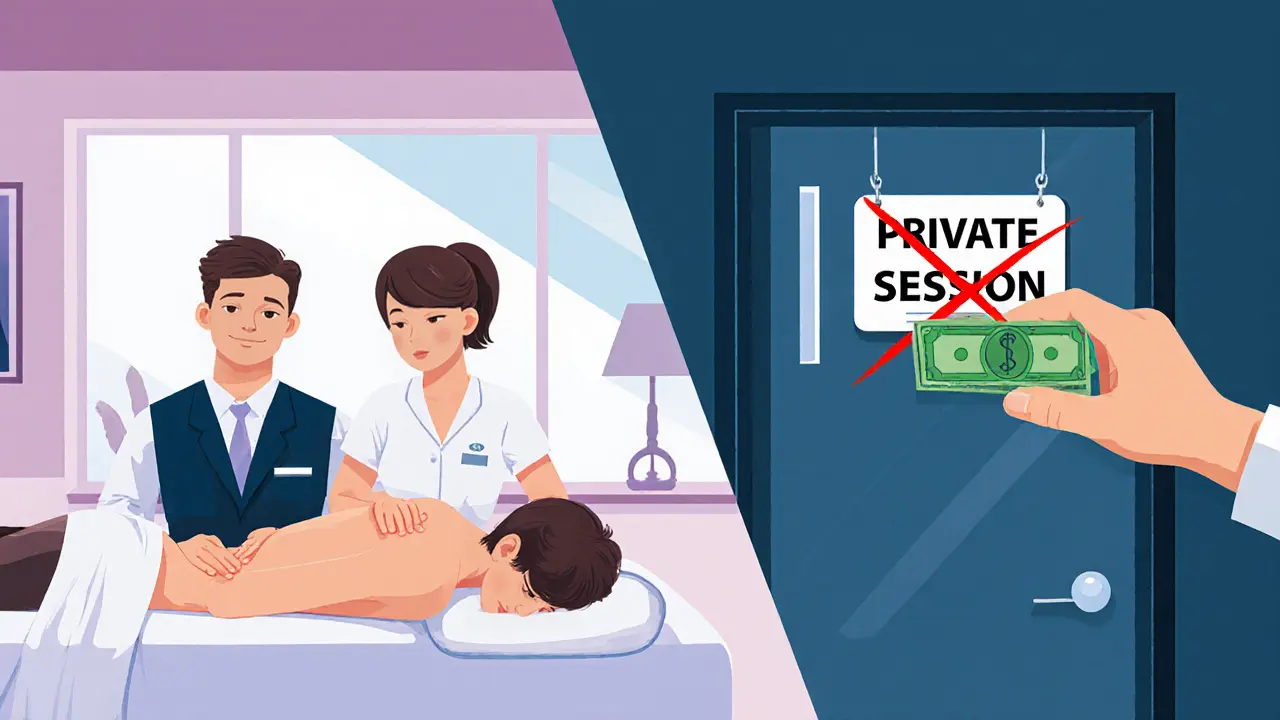
Couples’ massages are legal-if they’re done right. Many luxury spas offer side-by-side treatments with two therapists. The room is shared, the massage is professional, and both people are fully clothed except for the area being treated. No private rooms. No touching beyond the therapist’s training. No suggestive language.
Always confirm the setup before booking. Ask: "Will we be in the same room? Will the therapists be in the room the whole time?" If they hesitate or say "it depends," walk out.
Alternatives: Safe Ways to Relax in Dubai
Dubai has dozens of world-class wellness centers that deliver real relaxation without risk. Here are three trusted options:
- Spa at The Ritz-Carlton, Dubai Mall - DHA-certified, licensed therapists, full medical history intake
- Al Nakhil Spa, Jumeirah - Traditional Arabic hammam and herbal massage, open to public
- Spa Al Maha, Desert Resort - Luxury desert experience with certified Ayurvedic and Swedish techniques
All three have websites with real photos, therapist bios, and booking systems. No mystery. No ambiguity.
Final Warning: Don’t Risk It
Dubai isn’t like Las Vegas or Amsterdam. It’s a conservative city with strict moral codes enforced by law. What seems like a harmless indulgence elsewhere is a criminal act here. The consequences aren’t just financial-they’re life-altering. Deportation. Entry bans. Criminal records. Lost jobs. Damaged reputations.
If you want a massage in Dubai, get one that’s legal, transparent, and professional. There’s no shortcut. There’s no secret code. And there’s no excuse for ignoring the law.
Is it legal to get a massage in Dubai?
Yes, but only if it’s a professional therapeutic massage from a licensed spa or wellness center. Any massage that involves sexual contact, suggestive behavior, or private sessions is illegal under UAE law. Always check for a Dubai Health Authority (DHA) license displayed at the facility.
Can tourists get away with sex massage in Dubai?
No. Tourists are not exempt from UAE laws. In fact, police actively target foreign visitors in massage parlors. Even asking for sexual services can lead to arrest, fines, deportation, and a multi-year entry ban. There is no "it’s just a vacation" loophole.
What’s the difference between a legal spa and an illegal massage parlor?
Legal spas have visible licenses, professional staff in uniforms, clear service menus, no private rooms, and payment handled at the front desk. Illegal parlors often have no signage, use vague terms like "special treatment," lock doors from inside, and ask for cash payments directly to the therapist. If it feels secretive, it’s illegal.
Are couples’ massages allowed in Dubai?
Yes, if they’re conducted in a shared, open room with two licensed therapists present at all times. The massage must be fully professional-no touching beyond therapeutic intent. Always confirm the setup before booking and avoid places that offer "private couples’ suites."
What happens if I’m caught soliciting a sex massage in Dubai?
You’ll be detained, questioned, and charged under Article 358 of the UAE Penal Code. Penalties include fines of AED 5,000-20,000, deportation, and a ban from re-entering the UAE for 3-5 years (or permanently). Your passport will be flagged in regional immigration databases, affecting future travel to Gulf countries.