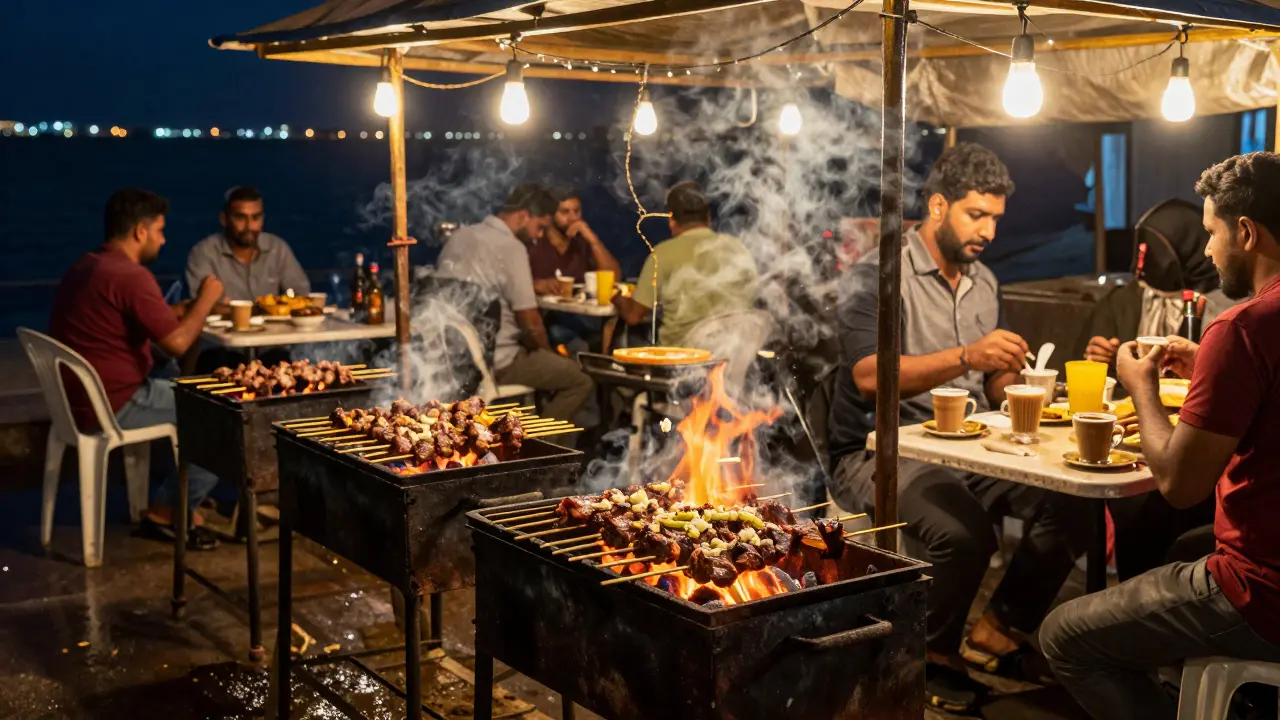
When the sun goes down in Abu Dhabi, the city doesn’t sleep-it eats.
Most tourists think of Abu Dhabi as palaces, mosques, and desert safaris. But if you’ve ever wandered the streets after midnight, you know the real magic happens when the crowds thin out and the food stalls light up. This isn’t just about grabbing a snack. It’s about finding crispy falafel wrapped in warm pita, sizzling kebabs dripping with garlic sauce, or sweet sticky dates drizzled with honey-all served under string lights in alleyways most guidebooks ignore.
The Midnight Kebab Scene: Where the Locals Go
If you want real Abu Dhabi after dark, head to Al Mina Road near the fish market. Around 11 p.m., the grills fire up and the line forms. This isn’t a fancy restaurant. It’s a cluster of three open-air stalls run by families who’ve been doing this for decades. The lamb kebabs here are marinated in cardamom, cumin, and a touch of rosewater. They’re charred just enough to crisp the edges but still juicy inside. Order them with a side of tabbouleh and a cup of karak chai-strong, sweet, and served in tiny glasses. Locals eat here at 2 a.m. after work, after parties, after mosque. You’ll see taxi drivers, nurses off shift, and teenagers sneaking out with their friends. No one talks about it online. You just hear about it from someone who’s been there.
24-Hour Arabic Cafés: More Than Coffee
Abu Dhabi has dozens of 24-hour cafés, but only a few know how to do food right. Al Fanar is a decades-old Arabic café chain that serves shawarma wraps, grilled halloumi sandwiches, and freshly baked khubz bread until dawn. Their chicken shawarma is wrapped in soft flatbread with pickled turnips, tahini, and a spicy red sauce that lingers just long enough to make you crave it again. Go at 3 a.m. on a Friday and you’ll find students cramming for exams, truck drivers refueling, and couples on late-night dates. The lights are dim, the AC is loud, and the coffee is always hot. They don’t take reservations. You just walk in, order, and sit at a plastic table next to strangers who become friends by 4 a.m.
The Hidden Night Market at Marina Mall
Most visitors think Marina Mall is just a shopping center. But every Friday and Saturday night, the outdoor terrace transforms into a pop-up food bazaar. Vendors set up under umbrellas selling everything from Emirati balaleet (sweet vermicelli with eggs) to grilled octopus skewers with lemon and chili. The standout? Al Saffa is a family-run stall that makes traditional Emirati luqaimat-tiny fried dough balls soaked in date syrup and sprinkled with sesame. They fry them fresh every 15 minutes. You wait five minutes, then get a paper cone with six hot, crispy bites. It’s like dessert from a dream. The line moves fast, but you’ll wait anyway because it’s that good. Don’t miss the mango lassi made with real fruit-no powder, no syrup, just blended fresh.

Seafood by the Water: Where the Fish Comes in at Dawn
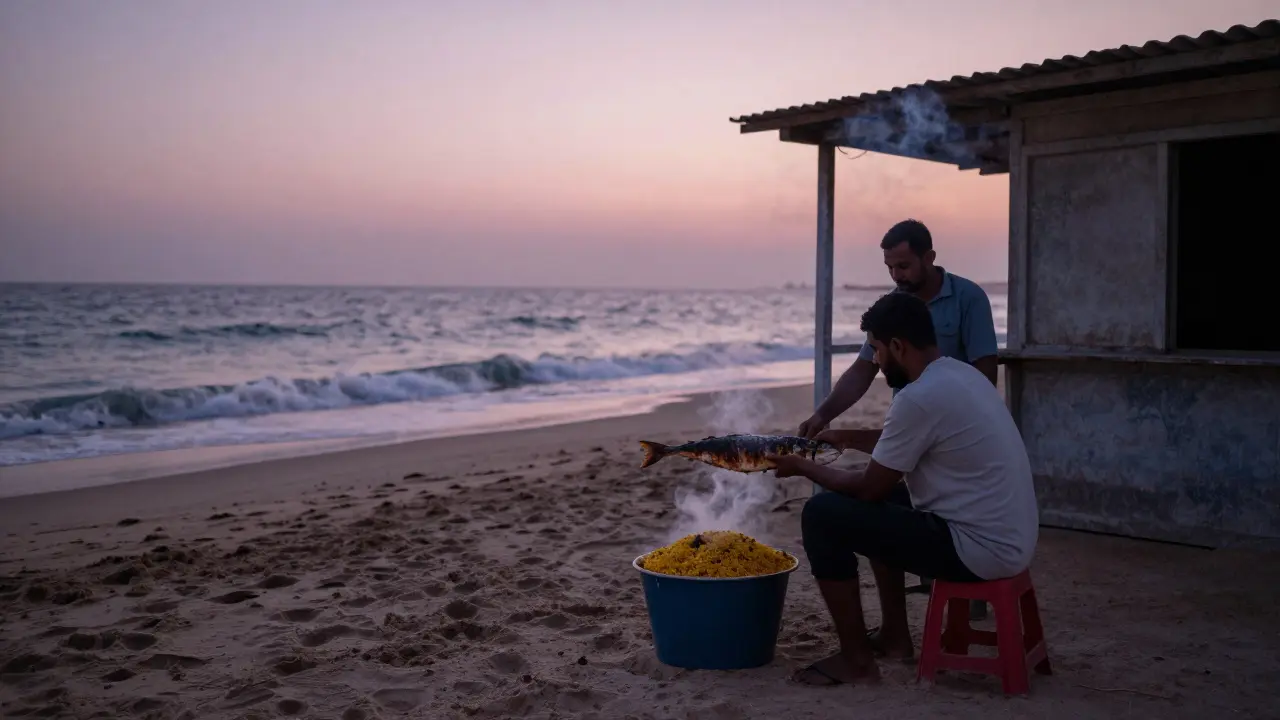
At the Al Raha Beach waterfront, a handful of seafood shacks open at 10 p.m. and stay open until sunrise. These aren’t tourist traps. They’re run by fishermen who bring in their catch at 5 a.m. and sell the leftovers the night before. The star is the grilled hammour-local grouper-with a dusting of baharat spice and a squeeze of lime. It’s served with rice cooked in saffron and cardamom. You sit on low stools, feet in the sand, watching boats bob in the dark water. The smell of salt and charcoal fills the air. You order by pointing. No menu. No English. Just a nod and a smile. A whole fish, two sides, and a bottle of water costs about 80 AED. It’s the best value in the city.
Street Sweets That Will Change Your View of Desert Desserts
Forget the overpriced macarons at the hotels. The real Abu Dhabi sweets are sold from carts parked near parking lots and metro stations. Al Hareem is a mobile dessert cart that’s been operating since 2012, serving kunafa with fresh cheese, warm syrup, and crushed pistachios. The cheese is stretched thin, melted just enough to pull like taffy. They serve it piping hot, straight from the oven. Another must-try: Mazafati Dates is a stall that sells fresh, soft dates stuffed with almond paste and dipped in dark chocolate. They’re not the dried kind you find in supermarkets. These are plump, juicy, and harvested from the oases just outside the city. Eat one with a cup of cardamom coffee and you’ll understand why locals call this their midnight therapy.
What to Avoid: Tourist Traps and Empty Promises
There are plenty of places that advertise "24-hour Abu Dhabi dining"-but most are just cafés with air conditioning and English menus. Avoid anything with neon signs, English-only staff, or photos of dishes that look nothing like what’s served. If a place has a menu with 50 items and a selfie wall, skip it. The best food here doesn’t advertise. It just shows up. Look for places where the staff speaks Arabic more than English, where the tables are sticky from spilled tea, and where the smell of garlic and cumin hits you before you even step inside.
When to Go: Timing Matters
Friday and Saturday nights are the peak. That’s when the city truly wakes up. Weeknights are quieter, but still alive. The best time to hit the food spots? Between 11 p.m. and 2 a.m. After 3 a.m., most stalls start packing up. The seafood places close right after sunrise, so plan your visit before 6 a.m. If you’re staying in the Corniche area, walk to Al Mina. If you’re near Yas Island, hop in a taxi-most drivers know the spots. Don’t rely on Google Maps. It doesn’t list the best ones.
How to Eat Like a Local
- Bring cash. Most stalls don’t take cards.
- Order by pointing. No need to know Arabic. A smile and a thumbs-up works.
- Don’t rush. Meals here aren’t about speed-they’re about lingering.
- Share everything. Even if you’re alone, ask if you can split a plate. Locals do it all the time.
- Ask what’s fresh. The fish, the dates, the herbs-they change daily.
What’s Next After Midnight?
After you’ve eaten your way through the night, walk off the meal along the Corniche. The city is quiet, the sea is calm, and the lights from the skyscrapers reflect off the water. You’ll realize Abu Dhabi isn’t just about luxury. It’s about community. About people who work all day and still show up at 2 a.m. to feed strangers. That’s the heart of the city. And that’s what you’ll remember long after the last bite of kunafa is gone.
Is Abu Dhabi nightlife safe at night?
Yes, Abu Dhabi is one of the safest cities in the world, even at night. The streets are well-lit, police patrols are common, and most food areas are crowded with locals. Just use common sense-stick to busy areas, avoid isolated alleys, and don’t carry large amounts of cash. The food spots mentioned here are all in well-traveled zones.
What’s the best time to visit Abu Dhabi for night food?
November through March is ideal. The weather is cooler, making it comfortable to eat outside. Summer nights (June-August) are too hot for outdoor dining, and many stalls close early. Weekends-Friday and Saturday-are when the scene truly comes alive.
Can I find vegetarian options in Abu Dhabi’s night food scene?
Absolutely. Grilled halloumi sandwiches, falafel wraps, stuffed vine leaves, and luqaimat are all vegetarian staples. Many stalls also serve roasted eggplant with tahini, hummus with warm bread, and fresh vegetable juices. Just ask if a dish contains meat broth or gelatin-some sauces might have animal products.
How much should I budget for a late-night food crawl?
You can eat your way through three or four spots for under 100 AED ($27). A kebab wrap is 15-20 AED, a plate of luqaimat is 10 AED, a seafood meal is 70-80 AED, and drinks like karak chai or fresh juice cost 5-8 AED. Skip the fancy bars-this is about street food, not cocktails.
Do I need to speak Arabic to order food at night?
No. Most vendors understand basic English, but even if they don’t, pointing works. Many have pictures of their dishes on the counter. The most important thing is to smile, be patient, and say "shukran" (thank you). Locals appreciate the effort.